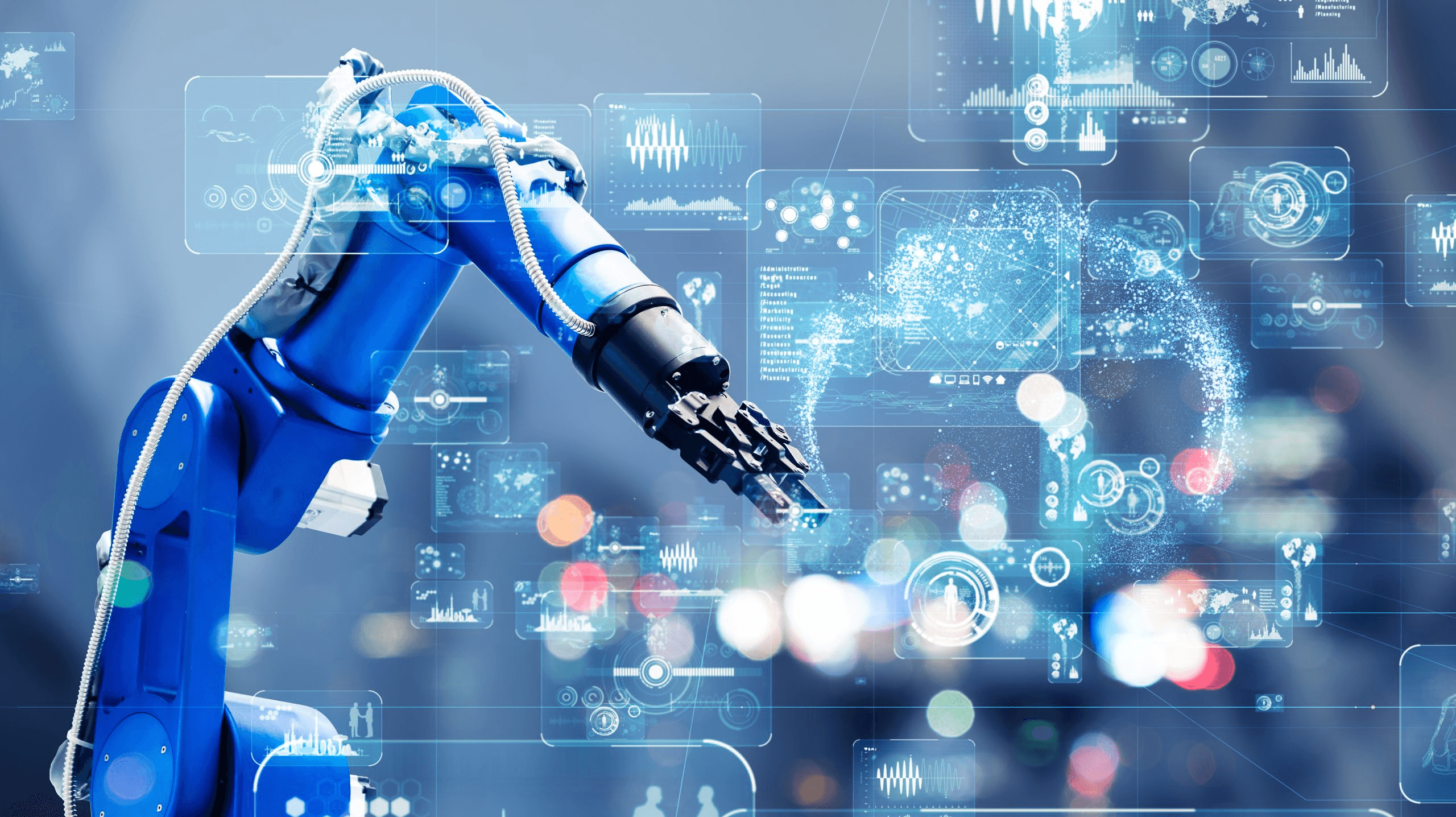
What is Physical AI vs Edge AI?
Physical AI and edge AI represent two of the most significant shifts in how artificial intelligence interacts with the world and with data. While both extend AI beyond centralized cloud systems, they serve related but distinct roles in bringing intelligence closer to everyday life and physical systems. Physical AI focuses on intelligent systems that act in the real world, and edge AI enables AI models to run directly on devices near where data is created, reducing reliance on distant servers and improving performance, privacy, and responsiveness.
What is Physical AI?
Physical AI refers to artificial intelligence systems that do not simply analyze data in a digital environment but interact with and influence the physical world. These systems combine AI models with sensors, actuators, and control mechanisms that allow machines to perceive their surroundings, reason about what they sense, and take meaningful actions in real time.
Unlike traditional robots that follow fixed rules, physical AI systems can adapt behaviors using machine learning and feedback loops that improve performance over time. In other words, they not only understand the world around them but also affect it by moving, grasping, adjusting, or otherwise engaging with physical objects and environments.
Physical AI must solve a full sense-think-act loop, where perception from sensors informs decisions and those decisions lead to actions that create new data and refine future choices. This places stringent demands on system design because machines must act safely, efficiently, and reliably in dynamic, real-world conditions.
What is Edge AI?
Edge AI is a complementary concept that enables AI models to run directly on devices at the edge of the network, such as sensors, smartphones, industrial machines, vehicles, cameras, and other embedded systems. Instead of relying on cloud servers for every computation, edge AI processes data locally where it is generated.
This localized processing enables real-time decision-making, drastically reduces latency, improves responsiveness, preserves privacy by keeping sensitive data on devices, and reduces the need for constant connectivity to a central server. Common examples include autonomous vehicle systems, smart cameras that detect anomalies instantly, wearable health monitors that react immediately to biometric changes, and factory sensors that trigger alerts without cloud round trips.
While edge AI focuses on where AI computation happens, physical AI is about what the intelligence does — interacting with the world. In many modern applications, physical AI would not be possible without edge AI, because the timing, reliability, and local autonomy required for physical action rely on fast, on-device AI processing.
Relations Between the Two
Physical AI and edge AI are closely linked but not identical:
-
Edge AI enables AI to run on local devices near data sources, enabling fast, low-latency inference and decision-making.
-
Physical AI takes the output of AI and translates it into actions in the physical world, using that local inference to control actuators, robots, or autonomous systems.
In this framework, edge AI forms the computational foundation for physical AI by delivering quick perception, pattern recognition, and context-aware decisions. Physical AI builds on that foundation by adding motor control, motion planning, adaptive behavior, and feedback learning, enabling machines to participate actively in their environment.
What's Driving Adoption Today
Technological advances have converged to make physical AI and edge AI practical today:
-
Sensor and actuator technology has become smaller, cheaper, and more reliable.
-
Edge devices now include dedicated processors like neural processing units and optimized hardware for AI workloads.
-
Simulation and learning environments allow AI models to train safely before deployment in the real world.
-
Distributed intelligence across fleets of devices improves collective learning and performance over time.
These developments are driving wide adoption across industries such as manufacturing, logistics, transportation, healthcare, and smart infrastructure. Machines powered by physical AI can autonomously perform inspections, optimize processes, assist in surgery, navigate complex terrain, and enhance service delivery with a level of autonomy that traditional automation could not achieve.
Core Components and Capabilities
Perception and Sensing
Physical AI and edge AI both depend on rich inputs from cameras, lidar, radar, microphones, and other sensors that allow systems to understand their environment.
Local Inference and Decision-Making
Edge AI enables AI models to make predictions and decisions locally with minimal delay, which is essential for safety-critical and time-sensitive actions.
Actuation and Control
Physical AI adds the next layer by converting decisions into physical actions through motors, robotic arms, steering systems, or other actuators — closing the sense-think-act loop.
Learning and Adaptation
Both edge AI and physical AI systems can adapt over time. Edge systems may update models based on new data, while physical AI systems refine behaviors through reinforcement learning or feedback from actions taken in the world.
Benefits and Impacts
The fusion of edge AI and physical AI offers significant advantages:
-
Faster response times because decisions happen locally instead of in distant cloud servers.
-
Improved safety and reliability because systems can respond within milliseconds to real-world conditions.
-
Enhanced privacy and data governance since sensitive information can remain on devices rather than being sent to centralized systems.
-
Greater autonomy and efficiency in tasks like autonomous driving, quality control, and adaptive robotics.
These benefits extend across sectors from industrial automation and smart cities to healthcare robotics and transportation, making the combination of edge AI and physical AI a cornerstone of modern intelligent systems.
Challenges and Future Directions
Despite the promise, both edge AI and physical AI face challenges:
-
Resource constraints on edge devices limit model complexity and processing power.
-
Safety and certification are critical when AI systems interact in the physical world.
-
Model optimization must balance accuracy, latency, and power consumption.
-
Integration complexity arises when combining multiple sensors, compute platforms, and mechanical systems into cohesive systems.
Industry efforts continue to address these challenges through new hardware designs, software frameworks, co-design methodologies, and hybrid cloud-edge architectures that allow dynamic distribution of workloads between local devices and centralized infrastructure.
Conclusion
Physical AI and edge AI represent a powerful evolution in artificial intelligence that bridges the gap between digital intelligence and physical action. While edge AI brings intelligence to where data is created, physical AI uses that intelligence to make things happen in the real world. Together, they drive a new era of autonomous, responsive, and context-aware systems that are reshaping industries and expanding the reach of technology into every part of daily life.